





DUT Archives & Special Collections

Billy Nair was a brave and steadfast freedom fighter. He sacrificed 20 years of his life on Robben Island, his family life, his health and well-being to improve the lives of the oppressed people of our country.
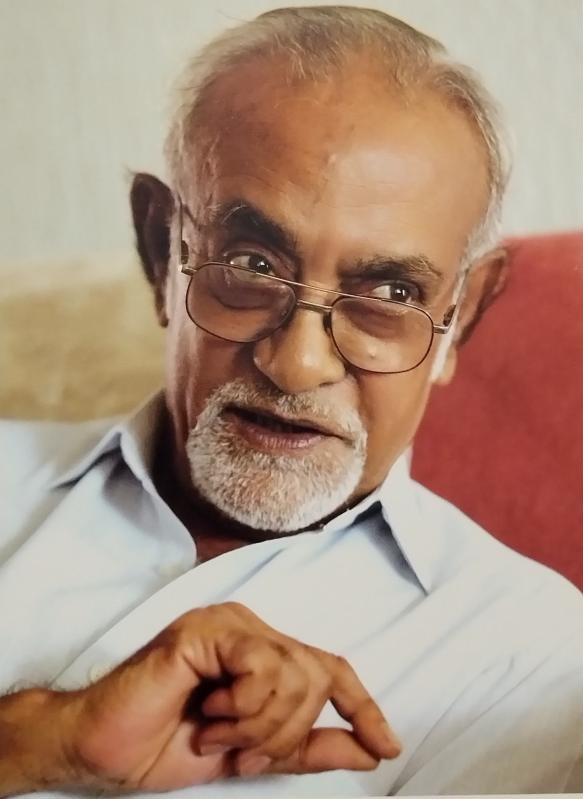
Mr Nair, from an early age, was infuriated by the racism and apartheid of South Africa. He became politically active and joined the struggle for freedom and human rights. Mr Nair was known for his hard work, courage and grit when taking on the oppressive government
He was in one of the first groups of NIC passive resisters that were arrested by the apartheid police. Thereafter he was arrested regularly for passive resistance or trade union activities. He used to say, “you get used to being arrested and learn how to deal with prison life. “As the struggle progressed, Mr Nair was a founder member of the Natal Command of Umkhonto we Sizwe (MK). They engaged in a sabotage campaign. Eventually they were captured by the apartheid police. Mr Nair was indestructible, he refused to tell the security police anything, even when brutally tortured over several months. He used to say, “they can go to hell, I am not telling them anything.” Mr Nair was sentenced to 20 years on Robben Island.
The Billy Nair collection paints a picture of his political and personal life. A humble, lesser-known South African who had a profound impact on our Struggle for Liberation.
The collection includes:
- Interview transcripts,
- Video & audio interviews,
- Letters and notes,
- Draft speeches,
- Photographs,
- Books – some autographed with personal sentiments, from well-known political leaders,
- Periodicals,
- Documents relating to political organisations, meetings, events and campaigns,
- Newspaper articles,
- Hansards.
Billy Nair was an active member and leader of the South African Congress of Trade Unions (SACTU), African National Congress (ANC), South African Communist Party (SACP), Natal Indian Congress (NIC) and Umkhonto we Sizwe (MK) in the 1950’s and 1960’s. In February 1964 he was sentenced to 20 years on Robben Island. He served his sentence alongside Nelson Mandela, Walter Sisulu and Ahmed Kathrada. Nelson Mandela fondly referred to him as “Thumbi” – which is Tamil for brother.
While in prison, Mr Nair studied, participated in political committees and contributed articles to political publications. He was released on 27 February 1984. On the next day he reported at the UDF offices to take up his political duties. After persecution by the security forces made it impossible to participate in open political activities, he went underground and continued his activities as a key leader of the Political Military Underground. He played this role until he was arrested in July 1990 and charged as part of the High Command of Operation Vula. Once again, he refused to cooperate with the security forces. He was released at the end of 1990 as the negotiations process picked up momentum.
Post apartheid he served as a member of Parliament for two terms. He took his duties and responsibilities as an MP seriously, diligently serving in the SCOPA Committee in Parliament and running a fully functional Constituency Office in Tongaat, KZN. He was always available to help community members with service issues, political matters and personal matters. Mr Nair also served or assisted with various Civic and Charity organisations. Privately he and his wife Elsie consistently sponsored or donated to Children’s organisations and organisations for the disabled over many years.
Mr Nair and his wife Elsie, despite their better fortune in their later life, continued to lead a frugal and humble life, saving all their monies, with the intention of caring for poor children in our country. Towards the end of his life, he indicated that he wished that all his monies, property and belongings form part of an Educational Trust that would provide funds to assist disadvantaged school students to further their education. His wife Elsie, together with close friends, founded such a Trust. The Billy and Elsie Nair Educational Trust owns and cares for the Billy Nair Collection, as well as actively funds disadvantaged school students as per his and Elsie’s wishes. Even at the very end, he and later Elsie were focused on providing for the next generation.